
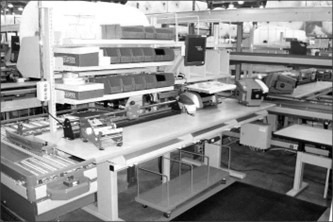
Packing stations may be the final step before products leave the warehouse, but it should never be an afterthought. In today’s fulfillment environment, where customers expect fast shipping, accurate orders, and sustainable packaging, packing stations play a critical role in both productivity and customer satisfaction. As order volumes rise and SKU counts grow more complex, well-designed packing stations can make the difference between smooth workflows and costly bottlenecks.
Why Packing Stations Matter More Than Ever
The rise of e-commerce has placed enormous pressure on distribution centers to move orders quickly and accurately. Packing stations, once viewed simply as the end of the line, now serve as a strategic checkpoint where accuracy, presentation, and efficiency converge. This is where items are verified, consolidated, protected, and made ready for the customer. A thoughtfully designed station ensures that this process is fast, ergonomic, and error-free, supporting higher throughput and helping teams keep pace with changing order demands.
Packing Stations With Warehouse Systems
Modern packing stations are most effective when fully connected to the warehouse’s information flow. Integrating WMS, conveyor systems, automation, and shipping software ensures packers receive real-time order information, label data, and cartonization logic. Eliminating unnecessary steps, such as manual lookups, repacking, or walking to retrieve materials, streamlines work and reduces the risk of errors. Today’s best operations treat packing as an extension of their digital ecosystem rather than a standalone task.
Designing A Station Around Real Work Flows
A productive packing station begins with a clear understanding of the tasks workers perform. Observing the natural workflow, mapping out movement patterns, and identifying delays or repeated steps provides the foundation for a smarter layout. The station should support logical motion, easy access to materials, and minimal reach distances. Every action, from scanning items to sealing cartons, should feel intuitive and
frictionless. When designed well, the station becomes almost invisible; workers can focus on the order, not the obstacles.
Ensuring The Right Supplies & Information
One of the most common causes of slow packing is searching for materials or dealing with inconsistent packaging supplies. Keeping detailed lists of box sizes, packing materials, machinery requirements, and dimensional data is essential for maintaining order and preventing downtime. Standardizing packaging procedures and keeping them easily accessible helps maintain consistency across shifts and employees. With sustainability now top of mind for many companies, packing stations must also accommodate recycled or right-sized materials without slowing down operations.
Prioritizing Ergonomics & Workstation Configuration
Ergonomics should guide every part of the workstation’s setup. Adjustable tables, properly placed scanners, well-positioned supplies, and adequate lighting reduce fatigue and limit workplace injuries. As facilities push to increase speed, ergonomics ensures that productivity gains do not come at the expense of worker well-being. Choosing the right workstation geometry, whether inline, U-shaped, or modular, allows operations to scale, adapt to new product lines, or integrate future automation without major redesign.
Eliminating Bottlenecks & Boosting Overall Productivity
When packing stations are intentionally designed and fully integrated, they prevent congestion and allow orders to flow smoothly from picking through shipping. This final touchpoint becomes an asset rather than a pinch point. In an era where delivery promises drive customer loyalty, the efficiency of the packing station directly influences operational performance of companies that invest in thoughtful design, consistent procedures, and dimensional data.