
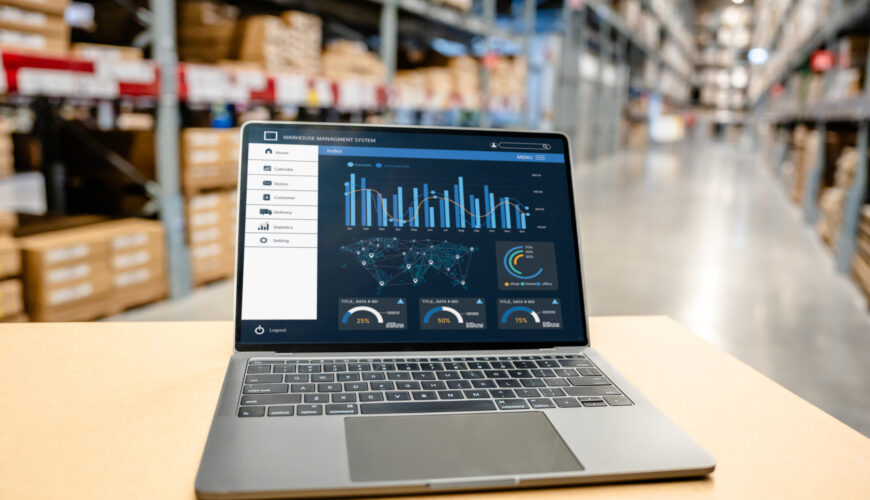
Addressing data quality before selecting robotics is crucial step to improving the efficiency of a warehouse operation. When companies begin exploring automation and robotics for their operations, the conversation almost always centers on the machines themselves. Which robot is best for this application? Which vendor has the most reliable hardware? Which platform offers the most advanced capabilities? These are reasonable questions, and the answers matter. But they are rarely the questions that determine whether an automation project succeeds or fails. That distinction belongs to something far less glamorous: the quality of the data the system runs on.
The Allure of Hardware and the Reality of Implementation
There is something tangible and exciting about selecting a robot. You can watch demonstrations, compare specifications, and envision the technology at work on your floor. Robot vendors are skilled at showing their equipment in its best light, performing precisely defined tasks in controlled conditions. What those demonstrations rarely reveal is how the system will perform when it encounters the messy, inconsistent, and often contradictory data that lives inside most real-world operations.
Automation systems do not think. They execute instructions based on inputs. When those inputs are clean, accurate, and well-structured, the system performs as expected. When the inputs are flawed, incomplete, or inconsistent, the system either fails outright or produces results that undermine the entire purpose of automating in the first place. No amount of engineering sophistication in the hardware can compensate for bad data feeding the process.
What Data Quality Actually Means in an Operational Context
Data quality is not simply about whether numbers are entered correctly into a spreadsheet. In an operational environment, it encompasses the accuracy, completeness, consistency, and timeliness of every piece of information the automation system depends on to make decisions.
In a warehouse setting, this means product dimensions, weights, barcodes, and storage locations must be accurate and consistently formatted across every system that touches the item. A robot directed to pick a product that is catalogued under three different SKUs, stored in a location that does not match the system record, or measured incorrectly in the item master will fail at that task regardless of how precisely its arm is engineered to move.
In a manufacturing environment, data quality extends to bill of materials accuracy, work order sequencing, machine parameters, and quality specifications. If the data governing what gets made, in what order, to what tolerance, and with what components is unreliable, the automation amplifies the errors rather than eliminating them. The robot does exactly what it is told, and what it is told is wrong.
In distribution and fulfillment operations, customer data, order data, inventory data, and carrier data must all be synchronized and accurate for an automated system to route, sort, and ship correctly. A single field that is consistently misformatted can cascade into thousands of misrouted packages before anyone identifies the source of the problem.
Why Automation Exposes Bad Data So Quickly
Manual operations have a natural tolerance for data imperfection because human workers compensate for gaps and inconsistencies without always realizing they are doing it. An experienced warehouse associate knows that the item labelled one thing in the system is actually stored somewhere else because that is how things have always been done on that shift. A line supervisor knows which work orders have errors and adjusts accordingly. These workarounds are invisible in the data, but they keep operations moving.
When automation replaces or augments those workers, the workarounds disappear. The robot does not know that the location field is wrong. The automated sorter does not know that the address format is a legacy artifact from a system migration three years ago. The result is that every data problem that was previously absorbed by human judgment is suddenly visible as a failure, an exception, an alert, or a stoppage.
This is not a flaw in the automation. It is actually one of automation’s most valuable features, since it surfaces hidden problems that were costing the operation money and capacity without anyone fully understanding why. But it means that organizations which deploy automation without addressing data quality first will experience a painful and expensive period of discovering just how compromised their data environment has always been.
The Cost of Getting the Sequence Wrong
Companies that invest heavily in robot selection before auditing their data quality tend to follow a predictable pattern. The initial deployment goes reasonably well in a controlled pilot environment where data is cleaned up specifically for the test. Expansion into full production reveals the extent of the underlying data problems. Performance falls short of projections. Troubleshooting focuses on the hardware and software configuration. Months pass. The problems persist because the root cause was never the robot.
The financial consequences are significant. Integration timelines extend. Consulting fees accumulate. Internal resources are diverted from other priorities. And in the worst cases, organizations conclude that automation simply did not work for them, when in reality the automation worked exactly as designed against a data foundation that was not ready to support it.
The robots were not the problem. They were never going to be the problem.
Building the Right Foundation First
The practical implication is that data readiness should be evaluated and addressed before, or at minimum in parallel with, the robot selection process. This means conducting a thorough audit of every data set the automation system will depend on, identifying gaps and inconsistencies, tracing them back to their sources, and building the processes and governance structures necessary to maintain data quality over time.
It also means being honest about the state of system integration across the operation. Automation systems rarely operate in isolation. They typically need to communicate with warehouse management systems, ERP platforms, transportation management systems, and a range of other enterprise tools. The cleanliness and reliability of the data passing between those systems is as important as the quality of any individual data set.
Organizations that do this work upfront tend to find that their automation performs closer to projected specifications from the start, that their integration timelines are shorter, and that the ongoing maintenance burden of the system is lower. They also tend to develop a much clearer understanding of their own operational data, which has benefits that extend well beyond any single automation project.
What Good Data Governance Looks Like in Practice
Establishing strong data quality for an automation environment is not a one-time cleanup project. It requires assigning clear ownership for each data domain, building validation rules into the systems that create and modify data, establishing regular audit processes to catch drift before it creates operational problems, and creating feedback loops so that exceptions generated by the automation system are traced back to their data source and corrected there.
It also requires cultural alignment. Data quality degrades when the people responsible for entering and maintaining data do not understand why accuracy matters or do not have the tools and processes that make accuracy easy. Training, accountability, and system design all play a role in sustaining the data environment that automation depends on.
Choosing the Right Robot Still Matters
None of this is an argument against thoughtful robot selection. The right hardware and software platform for a given application genuinely matters, and there are meaningful differences between vendors in terms of reliability, flexibility, support, and total cost of ownership. Getting that decision right is worth the time and analysis it deserves.
The point is simply that robot selection is not where automation projects win or lose. They win when the operational foundation, the data, the systems, the processes, and the people are prepared to support what the technology is being asked to do. They lose when those fundamentals are treated as secondary to the hardware conversation.
The best robot in the world, running on bad data, will underperform every time. A thoughtfully selected robot, running on accurate and well-governed data, will consistently deliver the value automation is designed to create.
Contact OPSdesign
Getting automation right starts with getting the fundamentals right. OPSdesign helps organizations assess their operational readiness, design intelligent systems, and build the data and process foundations that automation actually requires to perform. If you are evaluating robotics or automation for your operation and want a clear-eyed perspective on what it takes to succeed, reach out to the OPSdesign team.