
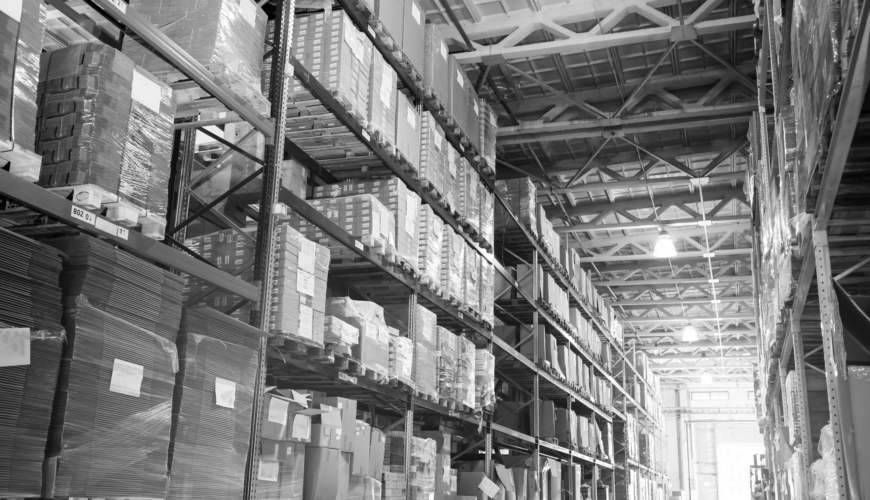
Keeping the right amount of reserve capacity is one of the more nuanced decisions in warehouse management, and it rarely gets the deliberate attention it deserves. Ask a warehouse manager how full their facility should be running and most will say something like “as full as possible.” It sounds like the right answer. Space costs money, and space that sits empty feels like waste. But maximum utilization is not the same thing as optimal utilization, and the difference between those two ideas is where a lot of warehouse operations quietly lose productivity, miss service commitments, and build up costs they never fully account for.
How Much Reserve Capacity Should Your Warehouse Have?
The Hidden Cost of Running Too Full
A warehouse operating at or near its theoretical maximum capacity is not running efficiently. It is running under strain. When storage density is pushed to its limits, the first thing that suffers is labor productivity. Putaway slows down because finding locations takes longer. Picking paths become less logical as overflow inventory gets staged in suboptimal positions. Replenishment cycles compress because there is no buffer to absorb variability in how quickly forward pick locations turn over.
The ripple effects go further. Receiving dock congestion increases when there is nowhere clean and accessible to stage inbound freight. Cycle count accuracy tends to decline because overcrowded locations are harder to verify and easier to miscount. Damaged product rates often climb as workers navigate tighter aisles and stack inventory in ways that create instability. None of these costs show up on a single line in an operations report, but together they represent a meaningful drag on performance that compounds over time.
There is also the question of what happens when volume spikes. A warehouse with no reserve capacity has no ability to absorb a sudden surge in receipts, a seasonal push, a supplier sending early, or a large unexpected order. Every one of those events becomes a crisis rather than a managed challenge, and the response typically involves expensive expedients like off-site overflow storage, emergency labor, or deferred receipts that create their own downstream problems.
Why a Single Percentage Rarely Tells the Whole Story
The most common answer to the question of how much capacity to hold in reserve is somewhere between fifteen and twenty percent of total storage positions. That range is a reasonable starting point, but it is not a universal prescription, and applying it without context can lead to the wrong conclusion for a specific operation.
The right reserve level depends on several factors that vary significantly from one business to the next. Demand volatility is one of the most important. An operation serving a highly seasonal business, a promotional-heavy retailer, or a customer base with unpredictable ordering patterns needs more reserve than one with steady, forecastable volume. The cost of being caught without capacity when volume surges is far higher than the carrying cost of holding extra space in reserve during quieter periods.
Inventory profile also matters. A facility storing a large number of SKUs with relatively low velocity per item needs more positional flexibility than one storing fewer SKUs at high volume. High SKU count operations depend on available locations to maintain slotting logic and keep picks efficient. When those operations run too full, slotting discipline breaks down and labor efficiency suffers in ways that are hard to recover without a significant re-slotting effort.
The physical characteristics of the building itself affect the calculus. Facilities with challenging layouts, limited dock doors, older racking configurations, or constrained aisle widths have less operational flexibility than well-designed modern buildings, which means they need more reserve capacity to operate smoothly at a given utilization level. A tight building running at eighty-five percent may perform worse operationally than a well-configured building at ninety percent.
Measuring Capacity the Right Way
One of the reasons the reserve capacity conversation is more complicated than it first appears is that warehouse capacity is not a single number. It is several numbers, and they do not always move together.
Storage position utilization measures how many locations are occupied versus available. Cubic utilization measures how much of the building’s total volume is actually being used by inventory. Floor space utilization measures how much of the footprint is dedicated to active operations versus staging, aisles, and support areas. A warehouse can show high position utilization while running relatively low on cubic utilization, or vice versa, depending on how product is slotted and how height is being used.
Understanding which measure is actually constraining your operation at any given time is essential before deciding how much reserve to target. An operation that is running out of floor positions but has unused vertical capacity may have a slotting problem rather than a capacity problem. An operation with plenty of open locations but chronic dock congestion may have a flow design problem. Reserve capacity targets should be calibrated to the specific constraint, not applied uniformly across all dimensions.
Seasonal and Cyclical Planning
For most operations, the right reserve question is not just what percentage to hold on an average day, but how to manage the transition into and out of peak periods. Facilities that carry adequate reserve at baseline can absorb volume growth during the ramp into peak without changing their operating model. Facilities that run lean at baseline have to fundamentally change how they operate during peak, which introduces training demands, process disruptions, and quality risks precisely when execution matters most.
Planning for peak reserve requires working backward from your historical or projected peak volume, understanding the lag between when receipts arrive and when outbound orders clear that inventory through the building, and building in a buffer on top of that to account for forecast error. It is a more deliberate calculation than simply deciding a percentage, but it produces a much more reliable operating plan.
For businesses with longer or more pronounced seasonal cycles, there is also a cost-benefit analysis to be done around whether reserve capacity should be maintained in the base facility year-round or whether some combination of flexible or short-term overflow space makes more economic sense for the peak period alone. That analysis depends on the cost of the base facility, the availability and cost of overflow options in the market, and the operational complexity of splitting inventory across locations.
Designing Reserve Into Your Operational Model
The most resilient approach to reserve capacity is to treat it not as leftover space but as a designed element of the operating model. That means establishing utilization targets by location type, by zone, and by time of year, tracking against those targets as a regular operational metric, and making deliberate decisions when utilization trends in the wrong direction rather than reacting after the fact.
It also means connecting the reserve capacity conversation to slotting strategy. A well-maintained slotting program continuously moves fast-moving products closer to pack and ship, right-sizes the space allocated to each SKU based on actual velocity, and frees up locations that are being held for products that no longer warrant dedicated slots. Good slotting discipline is one of the most effective ways to extend the functional capacity of a fixed facility, which means it directly affects how much reserve you have available at any given utilization level.
Inbound scheduling is another lever. Operations that manage dock appointments tightly, stage receipts before putting them away, and synchronize inbound volume with available putaway labor can absorb higher overall utilization levels without the congestion effects that make overcrowded facilities so difficult to operate. Conversely, operations with unmanaged inbound volume need more reserve to keep that congestion from cascading across the entire facility.
The Relationship Between Capacity and Service
Ultimately, the question of how much reserve capacity to hold in reserve is a service question as much as a cost question. A warehouse without adequate reserve is a warehouse that will struggle to protect service levels when conditions change, and conditions always change. Supplier lead times shift. Customer demand spikes. Weather, logistics disruptions, and unexpected events create volume variability that well-run operations absorb and poorly-prepared operations react to.
The cost of running with appropriate reserve is real and should be understood clearly. But the cost of chronic under-capacity, measured in labor inefficiency, service failures, emergency overflow arrangements, and the compounding effect of a facility that never quite has room to operate well, is almost always higher. The math favors keeping meaningful space in reserve, and the operations that understand that tend to perform more consistently over time than those chasing maximum utilization at the expense of operational health.
Contact OPSdesign
Whether you are designing a new facility, optimizing an existing one, or trying to understand where your current operation is leaving capacity and performance on the table, OPSdesign brings the analytical depth and operational expertise to help you find the right answers. The team works with distribution and fulfillment operations to build smarter, more resilient facilities that perform across every season and every volume condition.