
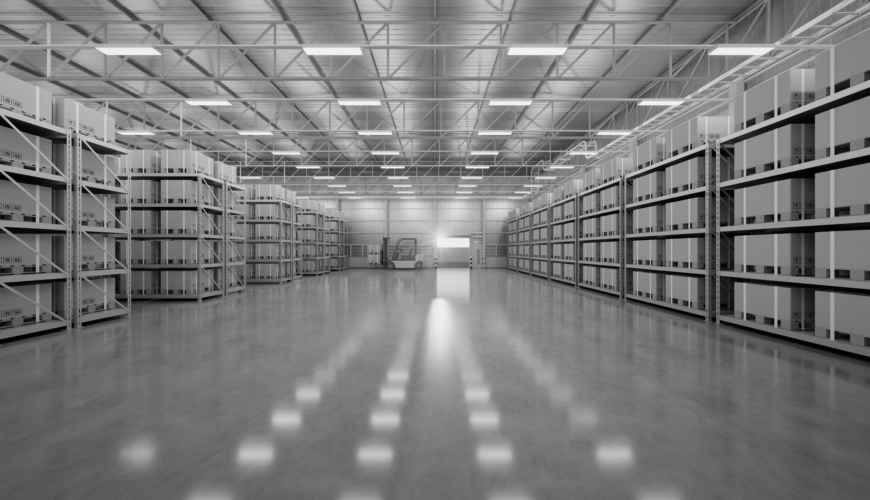
A distribution center never waves a big red flag when it reaches its limit. It’s quieter than that. It begins with a little friction here, a little tension there, things that feel more like growing pains than warnings. But every one of those moments is the building whispering that it’s no longer aligned with the operation you’re running. The more your business evolves, the more that original layout starts to feel like it belongs to a different era.
6 Signs Your Distribution Center Has Outgrown Its Design
(1) When the Building Starts Working Against You
At first, it shows up in the rhythm of the day. The flow that used to be natural now feels like it has to be forced. Travel paths stretch just a little longer than anyone remembers. Pickers and forklift drivers cross each other’s paths more than they used to, creating these small daily delays that never feel big enough to call out but definitely slow things down. Nothing is technically broken, but the building isn’t supporting the work anymore. It’s resisting it. You can sense the mismatch long before you can quantify it.
(2) When Temporary Fixes Become the Real Layout
Every operation leans on quick fixes from time to time. That’s normal. The problem is when those temporary solutions end up becoming the backbone of the entire building. Suddenly overflow trailers aren’t just for peak season, they’re the new warehouse annex. Racking that was supposed to be a short bridge solution becomes a permanent patchwork of odd aisle widths and awkward slot locations. You start redesigning processes not because they make sense but because you’re trying to work around a space that can’t flex anymore. Once you’re rearranging operations to accommodate a building instead of the other way around, it’s already telling you the truth.
(3) When Throughput Refuses to Budge
There comes a point where you’re doing everything right and still seeing no movement on the dashboard. That’s usually the moment when you hit the building’s natural ceiling. Labor is strong, training is tight, the WMS is dialed in, your supervisors are making good calls, and the KPIs just sit there like they’ve taken a vow of silence. Throughput flattens because you’re bumping up against the physical limits of the layout. When you reach that point, no amount of coaching, incentives, or process tuning can overcome the geometry of the space.
(4) When Ingenuity Turns into a Survival Mechanism
Operations people are creative by nature. They build workarounds like artists when space starts getting tight. They find tiny corners of unused space that no one knew existed. They create unofficial micro‑processes that keep things moving. They memorize which areas to avoid at which times of day because those choke points never cleared properly. They become the ones outsmarting the building each day just so the basics can get done. It’s admirable, but it’s also a subtle kind of operational debt. When creativity becomes the tool that compensates for poor flow rather than improving it, the building has shifted from partner to problem.
(5) When Customer Expectations Move Faster Than Your Facility Can
This is where it stops being an internal inconvenience and starts being a business issue. Customer expectations don’t stay still. They move faster every year. Shorter cutoffs. Wider SKU assortments. Omnichannel complexity that gets dropped into the same footprint that was originally built for single‑channel distribution. Accuracy demands that allow no wiggle room. Meanwhile, your building is still shaped for the business you were years ago. When you start trimming service levels or padding lead times because the physical layout can’t keep up, you aren’t just behind—you’re stuck.
(6) When the Space Becomes a Limiter Instead of a Launchpad
There’s a moment in every distribution center’s life cycle when the question is no longer whether you can squeeze more out of the existing footprint. It becomes whether you should. You know you’ve reached that point when the space begins shaping your strategy instead of your strategy shaping the space. You see it in the way teams move, in how inventory sits, in the compromises you keep making. A distribution center should be an asset that helps you grow. When it becomes the thing holding you back, the conversation shifts from incremental improvement to structural change.
Growth Isn’t the Problem
Outgrowing a distribution center isn’t a sign that planning failed. It’s usually proof that the business scaled faster and more successfully than anyone predicted. The real issue is pretending the building is still the right fit when everyone on the floor knows it isn’t. A DC should feel like something you can shape, refine, and optimize. When it starts pushing back, when it dictates your decisions, when it slows down the momentum you worked so hard to build, it’s time to rethink the entire footprint.
The building doesn’t tell you with alarms or warnings. It tells you in the friction, the improvisation, the stalled throughput, and the adjustments you never planned to make. When those signals become daily realities, the distribution center has already outgrown its role. And once you recognize that, you can start designing a space that matches not just the operation you have, but the one you intend to grow into next.