
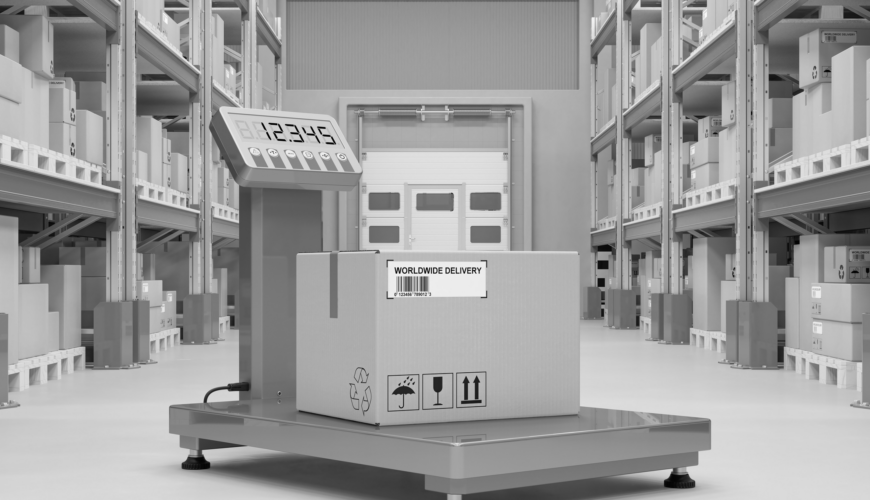
Intelligent decision systems can materially reduce air freight expense while improving sustainability and customer experience. Dimensional weight (DIM weight) pricing emerged in the parcel carrier market in the late 1990s and early 2000s, initially in international air freight and later in domestic small-parcel networks. As e-commerce volumes exploded and parcel carriers became increasingly space-constrained, traditional weight-based pricing no longer reflected the true cost of moving freight. Lightweight, bulky packages were consuming disproportionate trailer and aircraft capacity while generating relatively little revenue.
DIM weight was introduced to correct that imbalance. It assigns a billable weight based on the volume a package occupies rather than its actual scale weight. The calculation is straightforward: length × width × height divided by a carrier-defined dimensional factor. The higher of the actual weight or dimensional weight becomes the billable weight. In practical terms, shippers are now paying for both mass and cube and often paying a premium for air freight.
The Growing Complexity of Parcel Rate Structures
While DIM weight is the most visible change, it is only one component of an increasingly complex parcel pricing ecosystem. Modern carrier rate structures layer multiple mechanisms on top of base transportation charges: DIM weight, minimum billable weights, oversized package rules, additional handling fees, peak surcharges, and zone-based rate escalators. These elements interact in ways that are not always intuitive.
For example, reducing carton size may lower DIM weight but inadvertently trigger a higher minimum billable weight or a different surcharge category. Similarly, consolidating items into a single carton may reduce per-order shipment counts but push the package into an oversized tier that dramatically increases cost. As a result, minimizing air freight expense is no longer a matter of simple weight reduction; it requires a holistic understanding of how carrier rules intersect with order profiles and packaging decisions.
Why Cartonization Has Become a Strategic Discipline
Cartonization, the science of selecting the optimal carton for a given order, is now one of the most effective levers available to control air freight spend. At its core, cartonization seeks to minimize unused space while maintaining product protection and operational efficiency. Poor cartonization directly translates into higher DIM weight, more surcharges, and increased damage risk.
Effective cartonization starts with accurate, validated SKU dimensions and weights. Without reliable data, even the most sophisticated systems will make suboptimal decisions. From there, the focus shifts to packaging strategy. Overly broad standard carton assortments almost guarantee wasted cube, while overly narrow assortments can drive operational complexity and labor inefficiency. The optimal solution often lies in modular box families, right-sized custom cartons for high-volume SKUs, and flexible options such as telescoping boxes or adjustable inserts.
Using Technology to Optimize Air Freight Outcomes
Given the complexity of carrier pricing, manual decision-making is no longer sufficient. Advanced cartonization and rate-shopping software, integrated with WMS and TMS platforms, enables real-time optimization at the order level. These systems evaluate multiple packing scenarios, apply carrier-specific DIM rules and surcharges, and recommend the lowest total landed cost—not just the smallest box.
Critically, best-in-class solutions consider downstream impacts. They balance carton count, cube utilization, carrier selection, service level commitments, and labor efficiency. The goal is not to win on a single shipment, but to optimize cost and service across the entire shipping profile.
When and How to Minimize Air Freight Costs
Freight cost minimization is most effective when addressed upstream, not at the packing station. Key opportunities include:
- Product and packaging design, where dimensional efficiency can be engineered in before a SKU ever ships
- Order profile analysis, identifying candidates for consolidation, split shipments, or alternate service levels
- Carrier mix optimization, leveraging different DIM factors, zone structures, and surcharge thresholds
- Continuous rule tuning, as carrier tariffs, peak surcharges, and minimums change frequently
Importantly, optimization is not static. Carrier policies evolve annually, and sometimes more often, while product assortments and customer expectations continue to shift. Regular audits of carton utilization, DIM exposure, and surcharge trends are essential to sustaining gains over time.
The Bottom Line
DIM weight fundamentally changed how air freight costs are calculated, but it did not act alone. It is part of a broader shift toward pricing air freight based on true network impact rather than simple weight. In this environment, cartonization is a strategic capability.
Organizations that invest in accurate data, engineered packaging, and intelligent decision systems can materially reduce air freight expense while improving sustainability and customer experience. In a world where inches matter as much as pounds, the ability to control cube is a competitive advantage.