
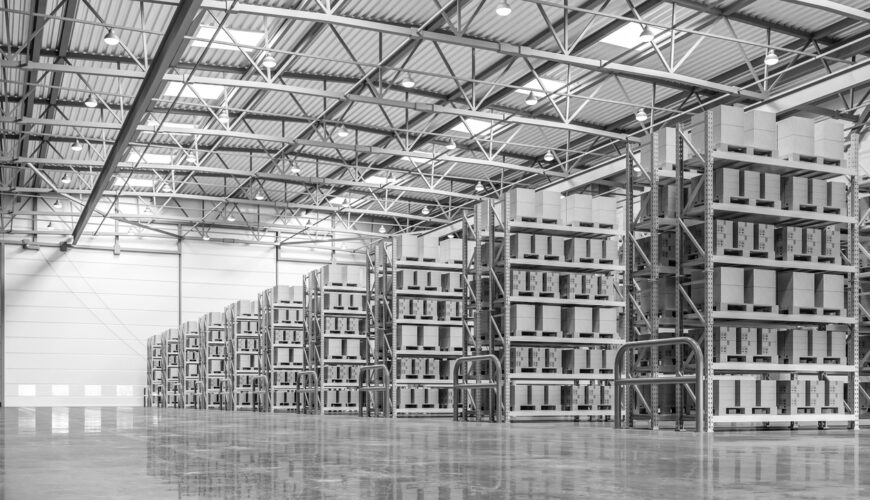
Warehouse layout basics are more than just a floor plan, it shapes how efficiently people move, how quickly orders leave the building, and how safely inventory is handled. A well-planned layout reduces unnecessary travel, reduces missed picks, and makes daily operations predictable and repeatable. At its core, a warehouse layout is built around three structural ideas: zones, aisles, and slots. Understanding how each one works and how they work together creates the backbone of any successful facility.
The Role of Zones in Warehouse Layout Basics
Every warehouse is divided into zones, each with its own purpose. These zones help organize inventory by characteristics such as size, demand, handling requirements, or storage methods. Typically, fast-moving products are stored closer to packing or shipping areas to reduce travel time, while slower-moving products are stored farther from these areas. Temperature-controlled items may be stored in a climate-controlled section, while bulky or hazardous goods remain in separate areas for safety and compliance.
Zones create a logical rhythm to the warehouse. Workers know where specific product types are located, and material-handling equipment can be assigned accordingly. As operations scale, zones also give managers the flexibility to expand or contract sections without interrupting the rest of the workflow.
How Aisles Shape Movement and Efficiency
Aisles are the pathways threading through the warehouse, and their width and arrangement strongly influence productivity. Too narrow, and equipment like forklifts struggle to maneuver; too wide, and valuable floor space is wasted. The layout may use straight aisles for simple navigation or adopt more complex configurations when space is tight or when certain equipment requires it.
Good aisle design minimizes congestion and makes sure pickers can reach products with minimal backtracking. Clear sightlines, proper labeling, and adequate lighting are also part of thoughtful aisle planning. Aisles ultimately function as the warehouse’s streets, guiding the flow of workers and machinery to prevent bottlenecks and maintain safety.
What Slots Represent in Daily Operations
Within each zone and aisle are the individual storage locations known as slots. A slot might be a pallet position, a shelf opening, or a bin in a small-parts area. Slotting refers to how products are placed in these specific locations. Effective slotting lines up items with the way they are picked, packed, and replenished.
Popular items are usually slotted at ergonomic heights to speed up picking and reduce strain. Heavy items are kept lower, while light and small products may be stored higher or in denser shelving systems. When slotting is carefully planned, pick paths become shorter, inventory stays more organized, and error rates fall dramatically. In growing operations, slotting is often reviewed regularly because demand patterns change and storage needs shift.
Bringing Warehouse Layout Basics All Together
Zones set the broad structure of the warehouse. Aisles create the movement patterns within that structure. Slots provide the precise locations that determine how quickly and accurately workers can pick and replenish inventory. When these three elements work in harmony, the warehouse becomes predictable, efficient, and easier to scale.
A well-designed layout isn’t static. It adapts as product lines expand, customer expectations rise, or technology changes the way tasks are performed. But understanding zones, aisles, and slots is the foundation on which every future improvement is built.
Need help with your warehouse design? Reach out to our team or follow us on Facebook to find out how we can help you today.