
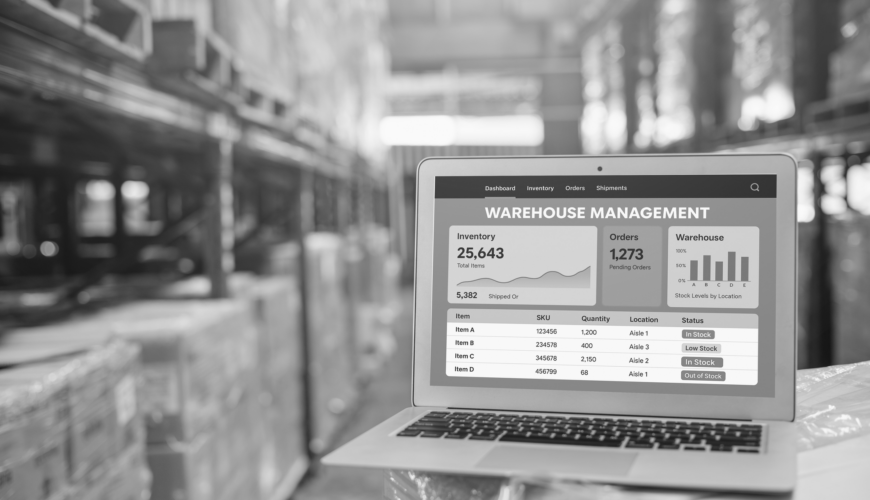
The lines between Warehouse Management Systems, Warehouse Execution Systems, and Warehouse Control Systems have never been more blurred. As automation vendors expand their capabilities upward and traditional software developers build downward, operations executives are left trying to decipher overlapping features and aggressive vendor promises. Selecting the right technology stack dictates whether a mechanized facility operates as a synchronized machine or a collection of isolated bottlenecks. Understanding the definitive boundaries of how these three software layers divide the labor of running a modern distribution center is the first step toward a successful integration.
WMS: The System of Record
The Warehouse Management System serves as the foundational layer of any modern facility. It tracks inventory from the moment it hits the receiving dock to the moment it leaves on an outbound trailer. A WMS is fundamentally transactional. It knows exactly what inventory you have, where it is located, and which orders need to be fulfilled.
Historically, these platforms relied on batch processing or wave management to release work to the floor. While highly effective for traditional pallet or case picking operations, legacy WMS architecture often struggles to adapt to the real-time prioritization required by fast-paced retail fulfillment.
WCS: The Equipment Controller
If the management system is the brain, the Warehouse Control System is the nervous system. The WCS acts as the critical middleware between the higher-level software and the Programmable Logic Controllers that run the physical hardware.
When a carton travels down a conveyor belt and approaches a divert shoe, the WCS makes the millisecond decision to route that carton to lane four instead of lane five. A control system does not care about your overall order backlog or long-term inventory levels. Its only job is to maximize the throughput of the mechanical equipment and prevent material flow jams.
WES: The Real-Time Orchestrator
The Warehouse Execution System emerged specifically to bridge the gap between the broad logic of management software and the hardware-specific control of the automation. A WES is designed for pure orchestration.
Rather than releasing a massive batch of orders in the morning and hoping the floor can handle the volume, an execution system continuously monitors the capacity of both human workers and automated zones. It dynamically drips orders onto the floor to ensure packing stations are never starved for work while simultaneously preventing picking aisles from becoming congested.
The Vendor Convergence Trap
The current software market is creating a dangerous trap for operations leaders. Traditional management software providers are rapidly acquiring execution modules to offer complete platforms. At the same time, hardware-native control vendors are expanding their software upward to bypass the management layer entirely.
Buying a system based on marketing labels rather than functional requirements often leads to paying for overlapping capabilities. It can also force a rigid legacy system to manage dynamic automation it was never built to handle.
The Vendor Independent Solution
At OPSdesign, we view software architecture as an engineering problem rather than a standard procurement exercise. Before engaging software vendors, a facility must define its exact operational workflows, throughput requirements, and automation constraints. By mapping the operational requirements first, supply chain leaders can specify the exact combination of management, execution, and control systems needed to operate the facility. This independent approach ensures seamless integration and protects the operation from costly structural bottlenecks.
Contact OPSdesign today by email or chat live with us to learn more about streamlining your warehouse operations.