
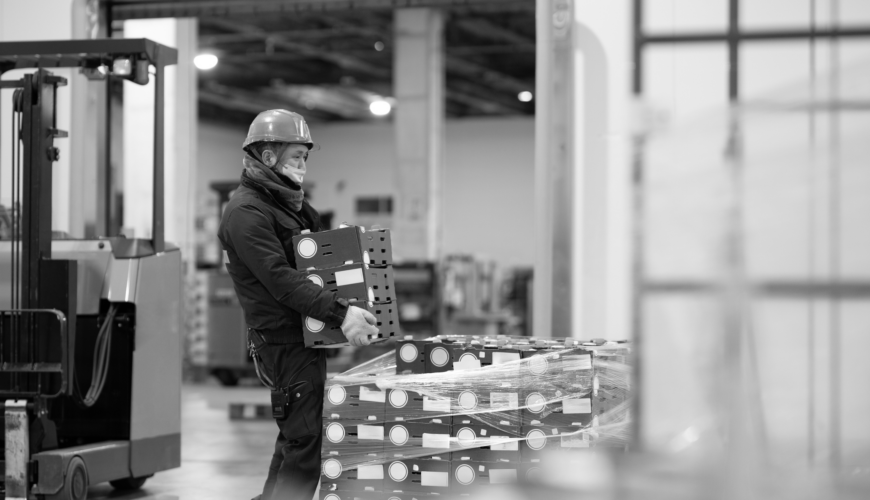
Labor-centric warehouse design means rethinking warehouses as environments that absorb human variability instead of being disrupted by it. Traditional warehouse design often starts with equipment, throughput targets, and SKU counts. Labor usually enters the conversation later as a line item or a headcount estimate. That approach made sense when labor was stable, predictable, and easy to scale. It no longer is.
Today’s supply chains operate in an environment defined by labor volatility. Turnover is high, skill levels vary widely, absenteeism is unpredictable, and training windows are shrinking. Yet many facilities are still designed as if the workforce will behave exactly as the spreadsheet predicts.
The Hidden Cost of Designing for the “Ideal” Worker
Most warehouse models assume a steady, experienced workforce that moves efficiently through the building. In practice, many facilities are staffed by a rotating mix of new hires, temporary workers, and employees learning multiple roles at once.
When a building is designed around ideal performance, small deviations create outsized problems. Pick paths become confusing. Travel distances amplify fatigue. Workstations require tribal knowledge to operate correctly. Supervisors spend their day firefighting instead of managing flow.
These issues rarely show up in simulation models, but they show up immediately on the floor. The result is slower ramp‑up times, inconsistent productivity, and higher injury risk.
A labor‑aware design does not assume perfect execution. It anticipates mistakes, learning curves, and human limits, then builds guardrails into the facility itself.
Reducing Cognitive Load Through Physical Design
One of the most overlooked aspects of labor-centric warehouse design is cognitive load. When workers must constantly decide where to go, which side to work from, or how to interpret ambiguous signals, productivity drops and errors increase.
labor-centric warehouse design can eliminate many of these decisions before training even begins.
Clear visual zoning, consistent aisle logic, standardized workstation layouts, and intuitive material flow reduce the need for constant judgment calls. When a worker can understand what to do just by standing in the space, the facility becomes easier to staff and easier to scale.
This matters most during peak periods, when temporary labor is brought in quickly and supervisors have limited time for hands‑on coaching.
Designing for Fatigue, Not Just Throughput
High‑throughput designs often push walking distances, reach heights, and pick densities to their theoretical limits. Over time, those limits collide with human endurance.
Fatigue drives errors, injuries, and turnover. A design that looks efficient on paper may quietly burn through workers in real life.
Labor‑conscious design looks at how work is distributed across a shift, not just how fast tasks can be performed. Shorter travel paths, balanced pick faces, appropriate lift zones, and intentional recovery spaces all reduce cumulative strain.
The payoff is not just healthier workers. It is more consistent performance over the entire shift, especially late in the day when errors typically spike.
Labor-Centric Warehouse Design Factors in Training Time
Most warehouses measure training in days or weeks. Few treat training time as a core design constraint.
Facilities that require long training cycles struggle to scale during demand spikes. They also suffer more when experienced workers leave, because knowledge walks out the door with them.
Designing for fast training means simplifying process paths, reducing exception handling, and minimizing the number of unique actions required to complete a task. It also means aligning physical layout with system logic so what the worker sees matches what the WMS expects.
When a new hire can become productive quickly, the building itself becomes a buffer against labor instability.
Flexibility at the Workstation Level
Flexibility is often discussed at the building or network level. Labor‑aware design brings flexibility down to the workstation.
Can a pack station easily switch between order profiles without reconfiguration? Can a picking area handle both single‑line and multi‑line orders without confusion? Can a worker move between roles without relearning the physical environment?
Workstations that adapt to different labor skill levels reduce bottlenecks during shift changes, call‑outs, and seasonal swings. They also make cross‑training more effective, which increases workforce resilience.
Why Labor-Centric Warehouse Design Matters More Than Ever
As supply chains face ongoing uncertainty, labor will remain one of the hardest variables to control. Automation can help, but it does not eliminate the need for people. In many cases, it raises the importance of having workers who can interact with complex systems safely and consistently.
Warehouses designed for labor reality are not just easier to operate. They are easier to recover when something goes wrong. They scale faster, train quicker, and perform more consistently under pressure.
In an environment where labor availability can change week to week, that resilience is no longer a nice‑to‑have. It is a competitive advantage.
Designing Buildings That Work With People
Labor-centric warehouse design is ultimately about people moving product through space. When design decisions acknowledge that people are variable, imperfect, and human, the entire operation benefits.
The most successful facilities are not the ones that demand perfect execution. They are the ones that quietly support their workforce, even on the hardest days.
That is what designing for labor reality really means.