
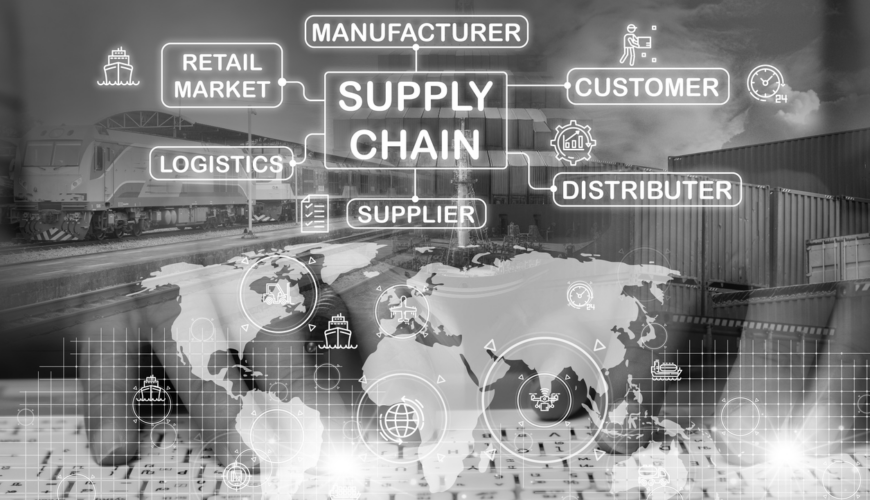
The terms supply chain, logistics, and operations are often used interchangeably, yet they represent very different parts of how a business makes and delivers its products. Understanding where each begins and ends isn’t just academic; it’s essential for building a resilient, cost-effective, and high-performance organization. For companies navigating growth, disruption, or modernization, clarity in these functions provides the foundation for better strategic decisions.
What Is the Supply Chain?
The supply chain is the broadest and most interconnected of the three disciplines. It encompasses the entire end-to-end journey of a product, from the earliest sourcing decisions to the final delivery to the customer. More importantly, it reflects the network of partners, manufacturers, technologies, and processes that must work together, often across continents, to reliably and efficiently meet demand.
A well-designed supply chain manages uncertainty, connects planning with execution, and enables an organization to adapt quickly. It touches forecasting, procurement, production planning, distribution strategy, and customer fulfillment. In essence, the supply chain is the strategic ecosystem that links the business with its suppliers, its internal operations, and ultimately its customers.
What Is Logistics?
Logistics sits within the supply chain but plays a distinctly execution-focused role. Whereas the supply chain defines the overall framework and objectives, logistics is responsible for the physical movement and storage of goods. This includes inbound flows from suppliers, outbound flows to customers, and everything that happens within distribution centers, transportation networks, and delivery channels.
The work of logistics is visible and tangible: goods being picked, packed, loaded, shipped, and tracked. It is highly detailed, time-sensitive, and precision-dependent. Logistics ensure that products reach the right place, at the right time, in the proper condition, and at a cost that makes sense. Even the most sophisticated supply chain strategy falters without strong logistics execution to support it.
What Are Operations?
Operations represent the internal engine of the organization, the systems, processes, and resources that convert inputs into finished products or services. While logistics is external-facing and movement-oriented, operations focus on how a company actually creates value.
This includes manufacturing lines, workflow design, quality control, labor management, scheduling, maintenance, and continuous improvement initiatives such as Lean and Six Sigma. Strong operations aim to maximize throughput, minimize waste, and ensure consistent quality. It is the discipline that makes sure the business can deliver what it promises, reliably and repeatedly.
How They Work Together
Although each function is distinct, they are deeply interconnected. The supply chain sets the strategy and defines how the overall value-delivery system should work. Operations execute the internal processes that create the product. Logistics moves the product through the network and into customers’ hands. When these elements are aligned, companies gain speed, resilience, and cost efficiency. When they are not, bottlenecks, excess inventory, service failures, and unnecessary expenses become inevitable.
Understanding the difference is not a matter of semantics; it enables leaders to build systems that work together rather than in silos. The result is a business that can respond confidently to market changes, customer expectations, and operational challenges.
Conclusion
Recognizing the distinct roles of supply chain, logistics, and operations allows businesses to improve not only how they function individually but also how they plan, produce, and deliver. Supply chain thinking sharpens long-term strategy, operations strengthen the organization’s ability to create value, and logistics ensures that value reaches the customer seamlessly. When companies understand these functions clearly, they can diagnose problems faster, invest more wisely, and build the kind of adaptable infrastructure that today’s competitive landscape demands. This clarity ultimately becomes a powerful advantage, driving better decisions, smoother performance, and stronger business outcomes.